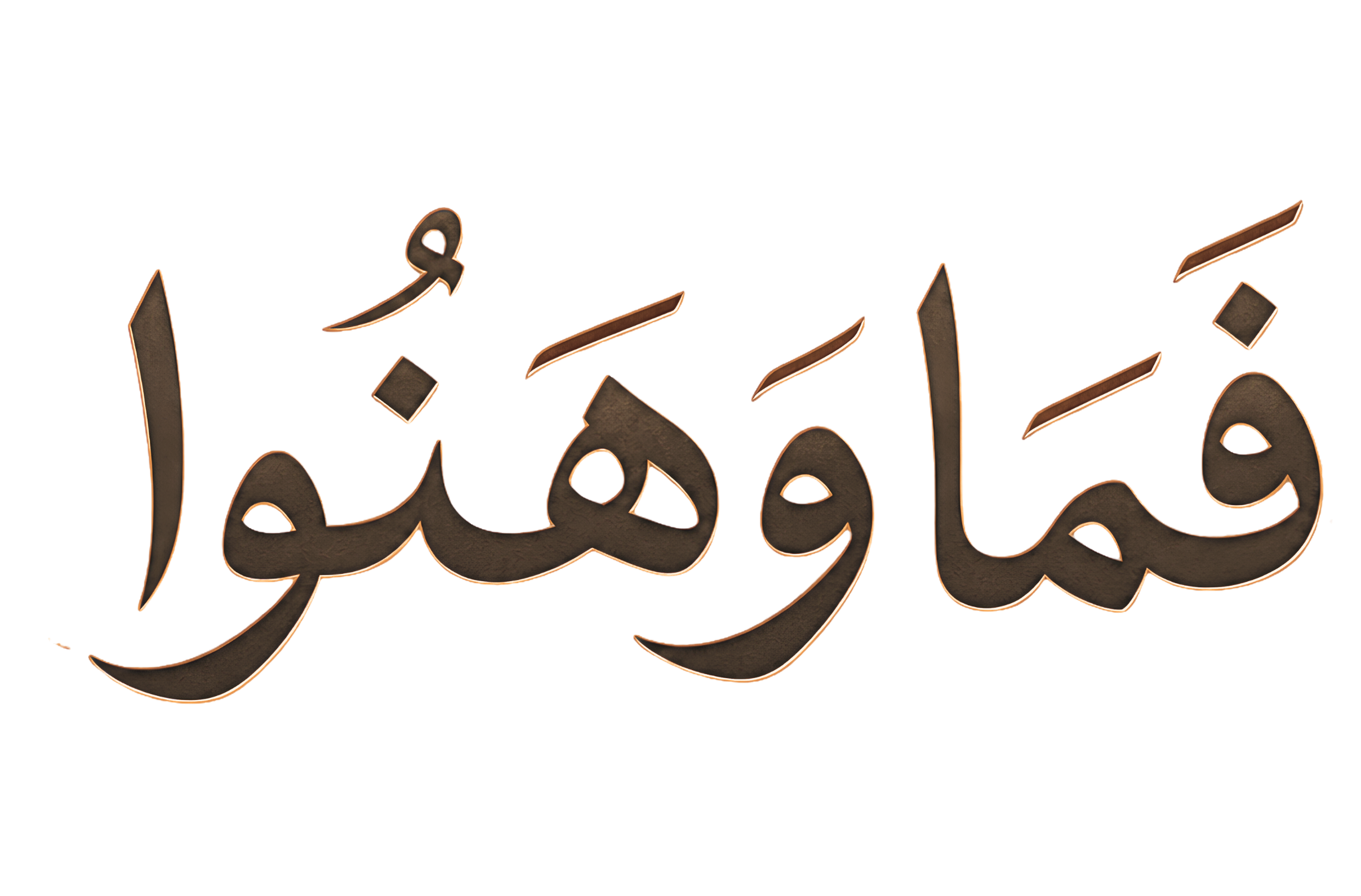
فَمَا وَهَنُوا
A part of history we're representing for the new generation in a new frame aligned with digital media
Start Reading
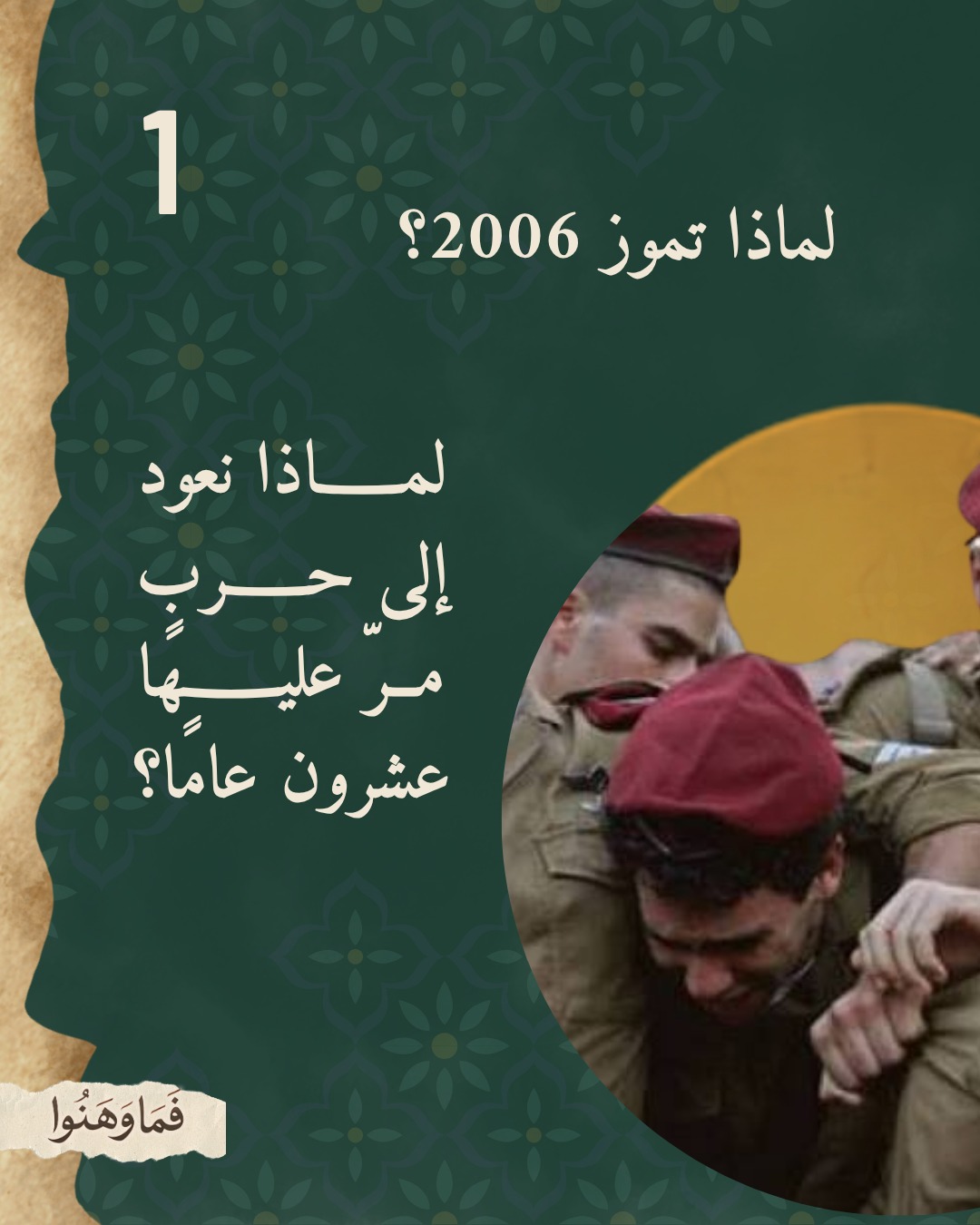
Building a digital bridge between the memory of the past and the new generation, preserving the history of the 2006 July War and transmitting it through a modern and interactive approach that enables younger generations to understand the events, their context, and the experiences of those who lived through them.
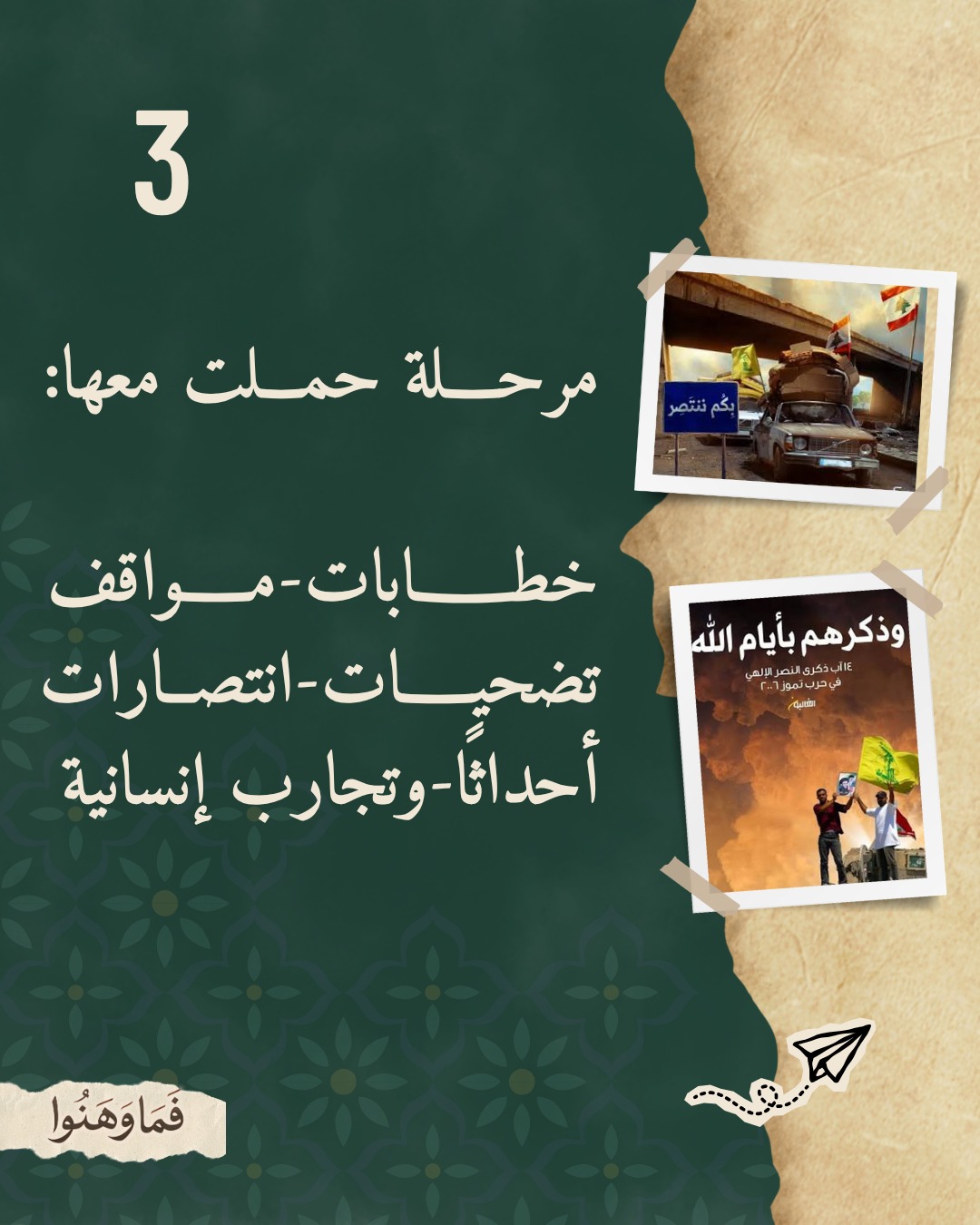
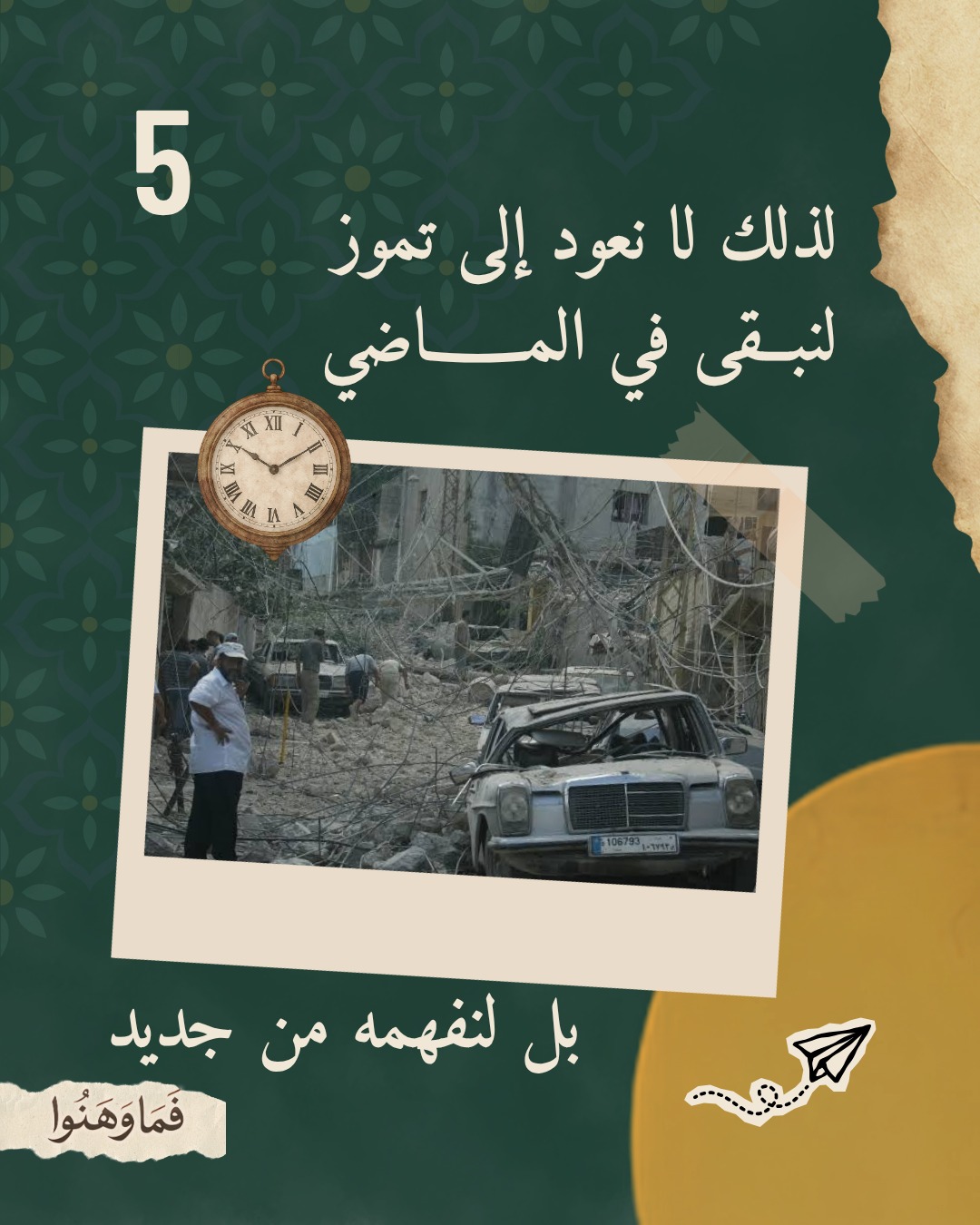
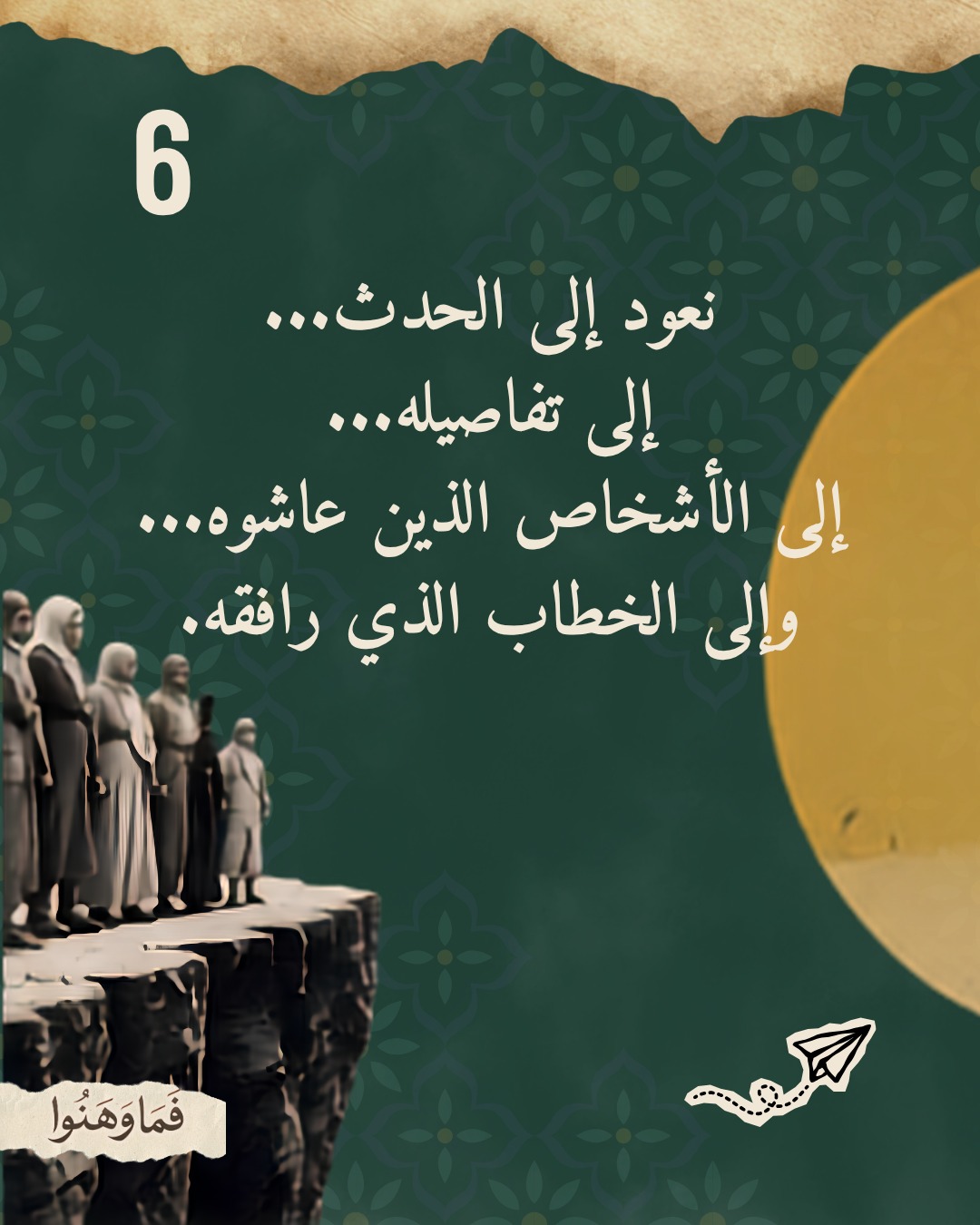
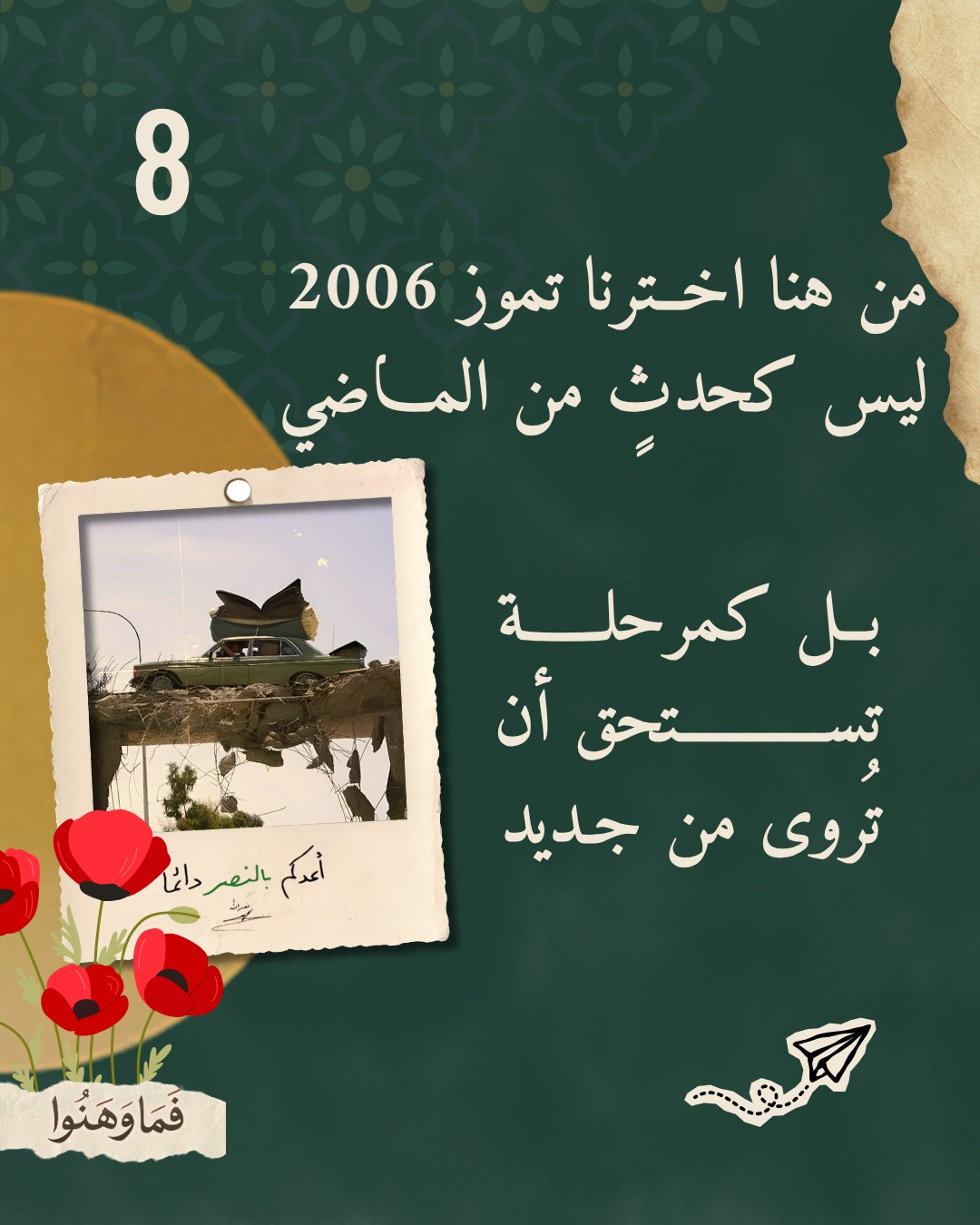
Documenting the history of the 2006 July War and its human, media, and social experiences, and making them accessible to the new generation through an interactive digital platform that brings together testimonies, documents, photographs, videos, a timeline, and storytelling, contributing to preserving memory and transmitting it in a way that corresponds to the nature of digital media and the interests of young people.

Documentation: Collecting and documenting personal testimonies, photographs, videos, documents, and speeches related to the 2006 July War.
Digital Storytelling: Presenting the events through short and interactive digital stories rather than relying solely on traditional historical narration.
Content Diversity: Combining texts, photographs, videos, audio recordings, and a timeline to present the experience from multiple perspectives.
Engaging the New Generation: Presenting the content in an interactive way that allows young people to discover information and choose the topics and perspectives that interest them.
Preserving Memory: Creating an organized digital archive that can be accessed by students, researchers, and future generations.
Connecting the Past with the Present: Going beyond presenting what happened by explaining its context and impact, and how it has remained present in collective memory.
Promoting Historical Awareness and Critical Thinking: Encouraging the new generation to read different sources and testimonies and to understand events within their historical context.